
Paddle Board Physics: The Science Behind SUP (Made Simple)
Paddle board performance is physics in action.
Buoyancy and trim keep you stable; drag and hull shape control glide; the paddle is an anchor that converts torso rotation into forward impulse—provided you catch clean and exit early.
Turning is torque: sweep strokes, reverse sweeps, and step-back pivots spin the board; fin template and position set the balance between tracking and agility.
Wind, waves, and current reward small adjustments—offset stance, cadence tweaks, and precise blade angles.
Choose volume and paddle size you can control, keep PSI up on iSUPs, and use PFDs and venue-appropriate leashes.
Master the physics, and paddling becomes smoother, faster, and more fun.
Table of contents
Stand up paddle boarding looks effortless when it’s done well: quiet entries, smooth glide, and easy turns. Under the surface, though, it’s pure physics—buoyancy holding you up, hydrodynamics pushing you forward, and torque spinning you where you want to go. Understanding a few key principles can make you more stable, faster, and less tired, no matter your board or venue. Read on to get the skinny on paddle board physics.
1) Float & balance: why you stay up (most of the time)
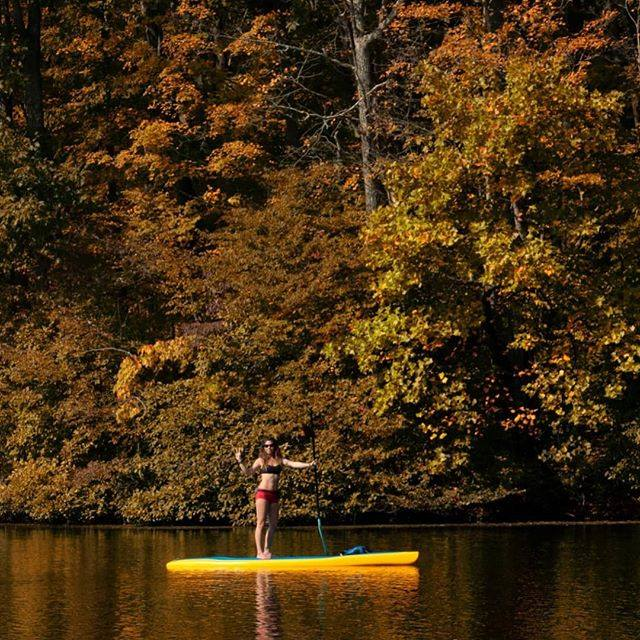
Buoyancy keeps you afloat: the board displaces water equal to the weight of the board + paddler + gear. Bigger volume = more displacement capacity, which is why high-volume touring/iSUP boards feel so supportive.
Stability is about how forces line up:
-
Center of gravity (you + board) vs center of buoyancy (displaced water).
-
When the board tilts, buoyancy shifts to oppose the tip. If your weight is low and centered (knees soft, feet over the handle), the restoring force wins and you recover.
Practical cues that improve the physics:
-
Stand over the carry handle (longitudinal center) for neutral trim.
-
Keep knees soft—micro-adjustments move your center of gravity.
-
Widen stance slightly in chop; add a light offset (front foot half step forward) for cross-winds.
2) Glide & drag: why some boards feel “fast”
Your speed is a tug-of-war between your stroke power and drag:
-
Skin friction (water rubbing the hull) rises with speed and surface area.
-
Form/wave drag (pushing water aside and making waves) rises quickly as you go faster.
Board design manages drag:
-
Displacement hulls (touring/race) slice water cleanly, reducing wave drag at steady speeds.
-
Planing/all-around boards ride higher and feel playful, but create more wave drag at speed.
Trim helps too:
-
If the nose plows, step back a couple centimeters; if the tail drags, step forward.
-
In chop/headwind, a touch more nose rocker and slightly aft stance keep the bow lively.
3) The paddle = your underwater lever
Every stroke is Newton’s 3rd law: push water back/away, get pushed forward. Your goal is to anchor the blade and move your body/board past it.
Key ingredients:
-
Clean catch: Bury the blade fully at your toes with a vertical shaft.
-
Torso rotation: Larger muscles = more efficient force; arms just guide.
-
Early exit: Finish around your feet; after that, the blade mostly lifts water (wasted energy).
Blade physics in plain English:
-
A larger blade grabs more water (great for short bursts, tiring over time).
-
A smaller/mid blade favors cadence and endurance with fewer joint loads.
-
Well-designed blades keep flow attached (less slip), turning your effort into forward impulse.
4) Turning & torque: how the board pivots
Turning is rotational physics: a stroke creates torque around the board’s center.
-
Sweep stroke (forward): Plant by the nose and sweep out in a crescent toward the tail. The water’s reaction spins you toward the paddle side.
-
Reverse sweep: Plant by the tail and sweep forward to tighten or finish a turn.
-
Step-back pivot: Shift a foot toward the tail to lift the nose; even a small sweep spins you fast.
-
Micro-draws along the rail trim your line without big yaw swings.
Fin setup alters the math:
-
Longer base / more depth = stronger straight-line stability (resists yaw), slower to pivot.
-
Shorter/flexible river fins = agility and rock safety, at the cost of tracking.
-
Slide the fin forward for quicker turns; back for better tracking.
-
5) Cadence & efficiency: speed without the strain
Efficiency = clean mechanics × sustainable rhythm.
-
Slightly quicker strokes with perfect catches beat slow heaves for most paddlers.
-
Maintain shaft verticality early; side force (angled shafts) becomes yaw and wasted energy.
-
Breathing rhythm (e.g., exhale every two exits) keeps shoulders relaxed and heart rate steady.
Simple diagnostic:
-
If the board snakes side-to-side, exit earlier and keep the blade close to the rail.
-
If shoulders cook, you’re arm-paddling—slow the catch, rotate from the torso.
6) Wind, waves, and current: working with nature
-
Headwinds: Shorten the reach a touch; quicker cadence reduces stall between strokes.
-
Crosswinds: Light offset stance and tiny draws hold your line; a fin slid back helps tracking.
-
Following seas/downwind: Slightly aft trim and well-timed catches on the backside of bumps link glides.
-
Current (rivers): Angle and ferry glide; plant with purpose. Use waist quick-release leashes in moving water (never ankle).
7) Board & paddle choices: how design changes feel
Boards
-
Volume & width: More volume/width boost primary stability (easy balancing). Narrower shapes feel faster but amplify wobbles.
-
Length: Longer boards track and glide; shorter boards pivot and surf better.
-
Construction: iSUPs are durable and forgiving; hard boards feel more reactive and can be faster at equal length/shape.
Paddles
-
Material: Carbon = light and stiff (less fatigue, cleaner timing).
-
Length: Start 6–8 in (15–20 cm) over height; tweak for iSUP thickness, cadence goals, and surf.
-
Blade area: Mid-small for most distance/fitness paddlers; size up only if joints are happy and cadence stays clean.
-
8) Technique tune-ups: tiny changes, big wins
-
Wall drill (on land): Practice the catch so the shaft stays vertical (imagine brushing a wall).
-
Silent tens (on water): Ten strokes with zero splash at entry—rest, repeat.
-
Catch-and-freeze: Plant fully and pause a beat to feel the anchor before adding power.
-
Cadence ladder: 2 min easy rhythm → 1 min +5 SPM; keep only the rung where the catch stays clean.
9) Comfort & safety: physics meets real life
-
Leash & PFD: Always. Flat/open water = coiled leash; surf = straight; rivers = quick-release waist belt.
-
Trim tweaks beat brute force: If the board feels sticky, adjust stance/fin before you “work harder.”
-
Sun & heat: Hydration, UPF layers, and breaks—fatigue ruins technique faster than anything.
-

Final Thoughts
Paddle boarding gets easier when you stop fighting the water. Let physics help: plant clean, rotate from the torso, exit early, and trim the board so it wants to glide. Small, consistent cues beat big, occasional overhauls. Tweak fin position before you swap fins, and adjust stance before you add force. The payoff is obvious—straighter lines, calmer balance, and more speed for the same effort.

Scott Knorp
Serial entrepreneur, passionate paddler, and co-owner of Glide.
FAQs
Why does my board wander side to side?
Late exits and angled shafts. Exit around your feet and keep the shaft vertical at the catch.
Do bigger blades make me faster?
Only if your cadence and joints keep up. Most paddlers go faster, longer with a mid/small blade and clean catches.
What’s the easiest way to turn tighter?
Use a forward sweep, or plant the blade and take a small step back for a pivot. Slide your fin forward for more agility.
Why do iSUPs feel different from hard boards?
They ride higher and flex slightly; hit recommended PSI for stiffness and consider a slightly shorter paddle to keep a vertical catch.
How do I know if my trim is right?
If the nose plows, step back a bit; if the tail drags, step forward. The right trim feels quiet and glidey.
What fin should I start with?
A medium dolphin fin (7–9") balances tracking and turning. Slide back for tracking; forward for agility.
Best quick drill for efficiency?
Silent tens. Zero splash entries force patience and clean blade angles.
How does wind change my stroke?
Headwinds: shorter, quicker strokes. Crosswinds: offset stance and micro draws. Downwind: slightly aft trim and timed catches on bump backsides.
Is a longer board always faster?
Often—but only if you can keep technique clean. If stability suffers, you’ll waste energy managing balance.
Why is a waist quick-release leash essential in rivers?
It lets you detach instantly if snagged. Ankle leashes can trap you in current— never use them on rivers.


Sign up for paddleboard deals and tips!

